
 News
Arctic Refuge Oil Push Puts Polar Bears at Risk as Seismic Testing Advances
November 16, 2026
FOR IMMEDIATE RELEASE
Date: November 16, 2026
Contact: Anja Semanco | anja@alaskawild.org | 724-967-2777
Arctic Refuge Oil Push Puts Polar Bears at Risk as Seismic Testing Advances
New federal proposal would allow harassment of polar bears during seismic exploration across the Refuge’s Coastal Plain despite repeated failures to attract major oil and gas investors
WASHINGTON, D.C. — The U.S. Fish and Wildlife Service today published a proposal that would allow the Alaska Industrial Development and Export Authority (AIDEA) to conduct seismic exploration in the Coastal Plain of the Arctic National Wildlife Refuge, opening the door to another round of industrial activity in one of the most ecologically important landscapes on the planet.
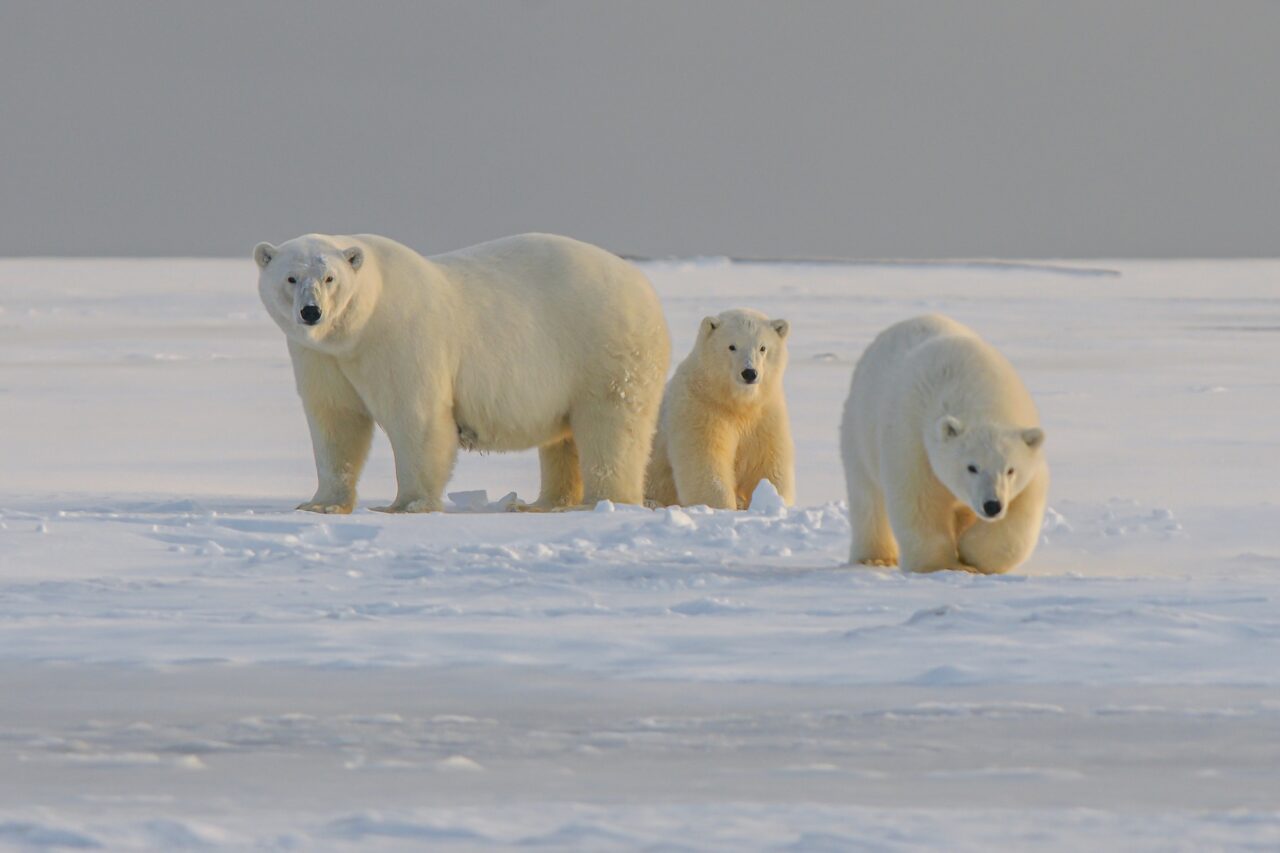
The Incidental Harassment Authorization (IHA) would allow harmful impacts to polar bears to occur because of the proposed seismic activities during the winter of 2026-2027. Occurring on designated critical denning habitat for polar bears, the proposed activity would include aircraft flights, thumper trucks, support vehicles, and mobile camps for up to nearly 400 workers during critical denning season.
The proposal comes despite repeated evidence that commercial oil and gas companies have little appetite for development in the Arctic Refuge. The 2025 federal lease sale attracted zero bids. The most recent sale, in June 2026, generated just $3.7 million in winning bids across five of the 58 tracts offered, with no major oil companies participating. Instead, the only bidders were AIDEA, a state-backed development corporation, and a small Alaska-based company.
“The oil and gas industry has repeatedly looked at the Arctic Refuge and decided the financial risks aren’t worth it. Not even major oil companies want to drill here because they understand the extraordinary costs, risks, and uncertainty involved,” said Kristen Miller, executive director at Alaska Wilderness League. “Yet this administration is determined to sacrifice one of the most important wildlife habitats on the planet to keep an oil development obsession alive. The Arctic Refuge is essential habitat for polar bears and other iconic Arctic wildlife, and no amount of political pressure or taxpayer money spent will make drilling here worth the cost. Polar bears and this extraordinary place they call home should not have to pay the price for the myth of profits.”
The Fish and Wildlife Service’s proposed authorization acknowledges the potential for significant disturbance to polar bears from seismic operations, aircraft overflights, and industrial activity near maternal dens. The agency’s analysis estimates that the proposed activities could result in 10 instances of Level B harassment and two instances of Level A harassment. Its modeling also identifies the possibility of lethal impacts to cubs if disturbance causes a mother to abandon her den.
Polar bears are already confronting the consequences of a rapidly warming Arctic and shrinking sea ice. Industrial activity in their critical habitat adds unnecessary pressure to a species whose survival is increasingly impacted by climate change, and are listed as threatened under the Endangered Species Act.
The proposal is another step toward industrializing the Arctic Refuge’s Coastal Plain, a globally significant landscape that supports polar bears, the Porcupine Caribou herd, migratory birds, and the subsistence traditions and ways of life of Indigenous communities.
###


