 News
News
Arctic Refuge Lease Sale Exposes Administration’s Reckless Gamble and the Market’s Clear Rejection
June 5, 2026
FOR IMMEDIATE RELEASE
Date: June 5, 2026
Contact: Anja Semanco | anja@alaskawild.org | 724-967-2777
Arctic Refuge Lease Sale Exposes Administration’s Reckless Gamble and the Market’s Clear Rejection
Anchorage, AK — For the third time, a lease sale in the coastal plain of the Arctic National Wildlife Refuge has produced results that fall catastrophically short of what Congress promised the American people when it authorized drilling in one of the nation’s most treasured wild places.
Today’s sale produced just nine bids from two entities—the Alaska Industrial Development and Export Authority (AIDEA) and HEX Energy LLC—neither of which represents the serious industry investment required to bring Arctic Refuge oil to market. Together they generated just $3,741,528 in total revenue—0.37% of the nearly $1 billion proponents claimed would offset the costs to the federal government of the 2017 Tax Cuts and Jobs Act. Overall, all three sales have fallen short of producing even 1% of the total revenue from the 2017 Tax Act, which is split between the federal government and state of Alaska. No major oil company participated. No credible path to the promised revenue exists.
The pattern is undeniable. The American taxpayers told this bargain was worth opening one of the country’s last intact ecosystems are still waiting for a return that has never materialized—and by today’s results, never will.
“When Congress passed the 2017 Tax Cuts and Jobs Act, the American people were told that opening the Arctic Refuge to drilling would generate close to $1 billion in federal revenue,” said Kristen Miller, executive director of Alaska Wilderness League. “Today, the total return remains a fraction of that promise. Economic gain was a false justification to permanently sell off the most ecologically and culturally significant landscapes in the United States. The American people don’t want this, the oil industry doesn’t want this, and our public lands deserve so much better. The Arctic Refuge, traditional homelands of the Gwich’in people, deserves permanent protection.”
This outcome was foreseeable. The world’s largest banks—Goldman Sachs, JPMorgan Chase, Wells Fargo, and others—declined years ago to finance Arctic Refuge drilling. Major insurers declined to underwrite it. Oil companies with the capital and technical capacity to operate in one of the world’s most demanding environments looked at the cost structures, the logistical challenges, accelerating permafrost instability, and the long-term demand outlook for high-cost Arctic oil—and consistently chose not to bid.
The Gwich’in Nation Has Opposed This From the Start
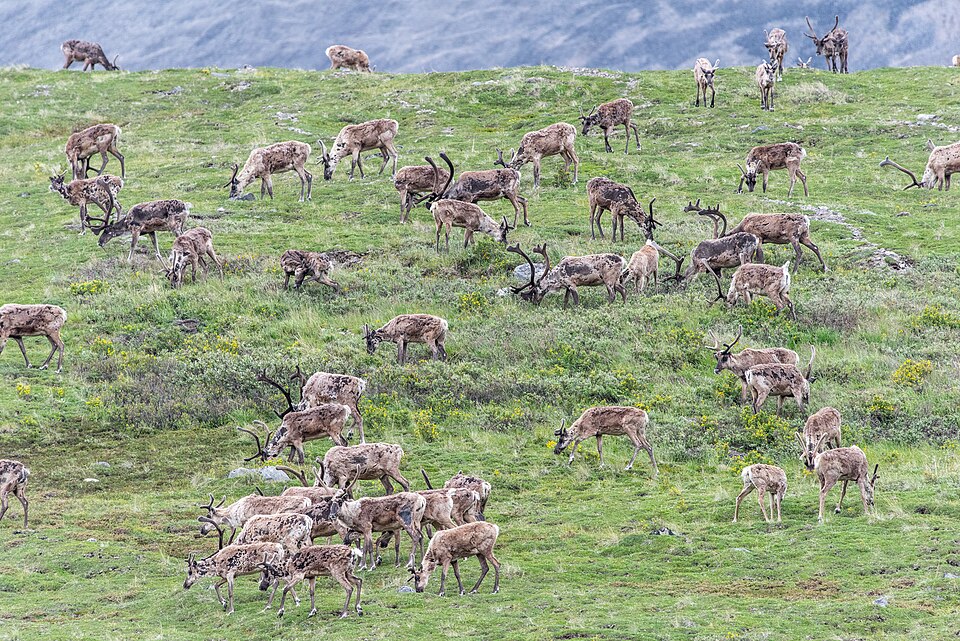
The economic failure of these lease sales cannot be separated from the human cost of pursuing them. The coastal plain—what the Gwich’in people call “the Sacred Place Where Life Begins”—is the calving and nursery ground of the Porcupine Caribou Herd, which the Gwich’in Nation has depended upon for thousands of years for their physical, cultural, and spiritual well-being.
The Gwich’in were not consulted when Congress opened this land to leasing, and they have opposed drilling at every turn—in Congress, before international bodies, and in the courts. They have been unequivocal: this is not a trade-off they will accept at any price. Given that the economic projections used to override their objections have now proven fiction, the case for continuing to do so has collapsed entirely.
Three Failed Lease Sales Are Enough
The Arctic Refuge coastal plain is the calving ground of the Porcupine Caribou Herd, one of the largest remaining terrestrial migrations on earth, and home to polar bears, musk oxen, wolves, Dall sheep, and hundreds of thousands of migratory birds. It is a landscape that cannot be restored once industrial development begins.
Congress opened this land on the basis of a financial promise it could not keep—a promise that has now failed three times. The legal mandate requiring the administration to continue holding lease sales, regardless of market interest, taxpayer return, or the wishes of the Gwich’in Nation, should be repealed.
###